
Does Chess Increase Intelligence? The Real Benefits for the Mind
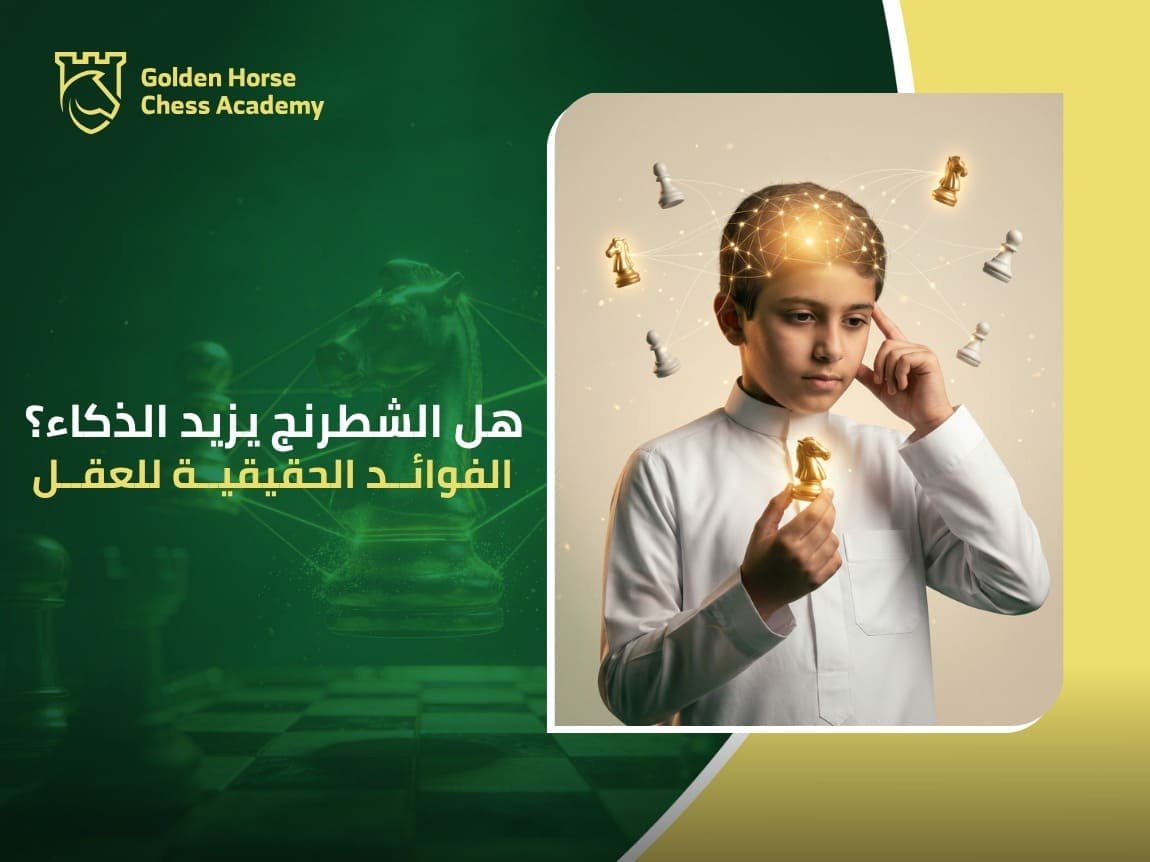
In every chess game, a silent battle takes place inside the mind before it unfolds on the board. Minutes of thinking, predicting future moves, analyzing possibilities, and making decisions that can completely change the course of the match. Over time, it is not only a player’s chess performance that improves, but also the way they think in school, at work, and in everyday life.
For this reason, chess is no longer viewed merely as a mind game but as a powerful tool for developing concentration, memory, and strategic thinking. Millions of people around the world play chess not only to win games but also to build a mind that is more capable of analysis and decision-making.
So, does chess really make you smarter, or is that simply a common belief? And what cognitive benefits have been supported by studies and real-world experience? Let’s explore these questions in detail.
Chess may not alter the brain’s physical structure, but it can reshape the way information is processed. Over time, these improvements become deeply rooted cognitive skills that positively influence academic, professional, and social performance.
What Is the Relationship Between Chess and Intelligence?
For centuries, chess has been associated with natural intelligence and genius, leading many people to view chess players as examples of exceptional analytical thinking. However, an important scientific question remains: Is success in chess a sign of general intelligence, or does playing the game help develop cognitive abilities over time? In recent decades, this question has become the subject of extensive academic research involving neuroscience, cognitive psychology, and education. Researchers have sought to better understand the relationship between regular chess practice, intelligence, and cognitive performance. Scientists explain that chess forces the brain to process a vast amount of constantly changing information. Players must anticipate their opponent’s moves, evaluate multiple possibilities simultaneously, and balance offense and defense within a strict set of rules. This repeated mental process activates what are known as the brain’s executive functions, including planning, attention control, spatial analysis, and decision-making abilities that are closely linked to practical intelligence.How Does Chess Improve Logical Thinking?
Logical thinking is the ability to analyze information, identify relationships, and reach sound conclusions based on evidence. This is precisely what chess requires during every game. When sitting at the board, a player’s mind is constantly engaged in:- Formulating hypotheses: “If I move my bishop here, how might my opponent respond?”
- Evaluating outcomes: “Will this move weaken my defense or strengthen my attack?”
- Choosing the best option: “Which move creates the best balance between offense and defense?”
Does Chess Improve Memory and Concentration?
Absolutely. Chess requires players to memorize openings, follow complex piece movements, and recall previous positions to learn from past experiences. This continuous challenge stimulates the formation of new neural connections and strengthens working memory the system responsible for holding and processing information simultaneously. Concentration is equally essential. Successful chess players maintain their focus on the board for extended periods while ignoring distractions. With regular practice, this ability transfers into other areas of life. Children become more attentive in class, while adults often experience greater productivity and efficiency at work.The Role of Chess in Developing Problem-Solving Skills
Chess can be viewed as a miniature laboratory for solving real-life problems. Every game presents challenges that require effective solutions:- Analysis: Understanding the current position and identifying strengths and weaknesses.
- Planning: Creating a long-term strategy to achieve objectives.
- Execution: Applying the plan while remaining flexible as circumstances change.
- Evaluation: Reviewing outcomes and learning lessons for future situations.
Does Every Chess Player Become Smarter?
This brings us to an important question: Is simply playing chess enough to make someone more intelligent? The scientific answer is that chess develops specific cognitive abilities, but it does not dramatically increase overall IQ. Research indicates that improvement is most noticeable in skills directly related to the game, such as logical reasoning, spatial memory, and processing speed. These gains do not always transfer automatically to unrelated areas such as language skills or artistic creativity. Nevertheless, the abilities strengthened by chess are among the most important foundations for academic and professional success. As a result, even if overall IQ remains relatively unchanged, practical performance often improves significantly.The Difference Between Natural Intelligence and Skills Developed Through Chess
| Fluid Intelligence | Skills Developed Through Chess |
| Logical reasoning and deduction | Improved concentration and focused attention |
| Fast processing of new information | Enhanced working and spatial memory |
| Ability to solve unfamiliar problems | Stronger strategic planning skills |
| Relatively stable with age | Improves through consistent practice |
The Impact of Chess on Children and Students
For Children: Building the Foundations of Critical Thinking
A study published in the journal Children found that elementary school students who practiced chess regularly demonstrated higher intelligence scores and greater accuracy in body-schema representation compared to children who did not play chess. Researchers used Raven’s Progressive Matrices to measure abstract intelligence and the Goodenough Draw-a-Person Test to assess visual and cognitive development. Their findings revealed a strong positive relationship between chess performance and cognitive growth. Scientists also found that chess helps develop what is known as the cognitive body schema the ability to understand spatial relationships, directions, and distances. These skills are closely connected to visual-spatial intelligence.For Students: A Bridge to Academic Success
For teenage students, chess offers several additional benefits:- Improved performance in mathematics through enhanced logical and spatial reasoning.
- Better concentration during study sessions, thanks to focus skills developed through regular play.
- Greater patience and perseverance, as students learn that success often requires long-term planning and consistent effort.
Benefits of Chess for Adults and Seniors
For Adults: A Powerful Tool Against Life’s Pressures
In a world full of distractions and constant stress, chess provides a mental refuge that helps organize thoughts and improve focus. Adults who play chess regularly often become:- Better at making calm decisions under pressure.
- More efficient in managing time and resources.
- More adaptable when dealing with unexpected changes.
For Seniors: A Protective Shield Against Cognitive Decline
Research suggests that regular mental activities, including chess, can help slow age-related cognitive decline. Chess encourages the brain to build what scientists call a cognitive reserve, which may help reduce the impact of conditions such as dementia and Alzheimer’s disease.What Do Scientific Studies Say About Chess and Intelligence?
The 2018 Meta-Analysis
According to a meta-analysis published in the journal Intelligence in 2018, chess skill is positively associated with several cognitive abilities, including logical reasoning, processing speed, and working memory. The findings also indicated that this relationship is stronger among younger individuals, suggesting that introducing chess during early education can have long-term benefits for developing practical intelligence in children.National Center for Biotechnology Information (NCBI) Report
A report published by the NCBI found that systematic chess training during childhood is linked to measurable improvements in nonverbal intelligence test scores, as well as enhanced spatial organization and long-term attention skills.Study Published in Children
The findings showed that the benefits of chess extend beyond academic and mathematical performance. Participants also demonstrated improvements in concentration, emotional control, and the ability to manage reactions during stressful situations, reflecting stronger coordination between cognitive and psychomotor functions.Can Chess Improve Academic Performance?
Yes, both directly and indirectly.Direct Benefits
Mathematics: Chess strengthens logical reasoning, geometric thinking, and pattern recognition. Science: The analytical and deductive skills developed through chess support scientific understanding and problem-solving. Language: Improved concentration helps students better comprehend complex texts and concepts.Indirect Benefits
Self-discipline: Students learn that success requires consistent practice and dedication. Self-confidence: Winning games and achieving progress can boost self-esteem. Time Management: Chess teaches players how to allocate and manage time effectively. Read Also: How to Play Chess for BeginnersFamous Chess Players Known for Exceptional Intellectual Abilities
Garry Kasparov
The legendary Russian chess champion is widely regarded as one of the greatest chess players in history. He remained unbeaten in official competition for 15 years and became the first World Champion to lose a match against a computer, Deep Blue, in 1997.Magnus Carlsen
The Norwegian World Champion is renowned for his extraordinary ability to remember complex chess positions and solve them with remarkable speed. He is often considered a symbol of deep strategic intelligence.Judit Polgár
Widely recognized as the strongest female chess player in history, Judit Polgár proved that women can excel at the highest levels of a game historically dominated by men. Her story remains an inspiring example of determination and intellectual excellence.How Can You Use Chess to Develop Your Cognitive Skills?
1. Start with the Fundamentals
Don’t rush into learning complex opening systems. Focus first on understanding how the pieces move, the basic rules, and fundamental strategic concepts.2. Practice Consistently
The brain is like a muscle it requires regular exercise. Even 15 minutes of chess each day can help stimulate cognitive development.3. Solve Chess Puzzles
Use chess apps or puzzle books to practice tactical exercises. These challenges improve memory, pattern recognition, and tactical thinking.4. Review Your Games
After each game, analyze your moves and identify mistakes. This process develops critical thinking and the ability to learn from experience.5. Learn from Professionals
Watch games played by elite chess players and try to understand their decision-making process. This exposes you to advanced strategic thinking and valuable mental models.Why Choose Golden Horse Academy?
At Golden Horse Academy, we believe chess is more than just a game it is a complete educational journey that begins with a player’s first move and continues toward intellectual and personal excellence.What Makes Us Different?
Innovative Training Programs Designed for You
We use a structured curriculum that progresses from beginner fundamentals to advanced competitive concepts while considering each student’s unique learning style and pace.Accurate Assessment and Progress Reports
Every student receives a comprehensive skill evaluation upon enrollment, followed by regular progress reports that keep families informed about development and achievements.Professional and Certified Coaches
Our coaching team includes instructors certified by the Saudi Chess Federation and the International Chess Federation (FIDE), with extensive experience training both children and adults.Internal and External Tournaments
We organize regular internal competitions to provide valuable competitive experience and participate in local and regional tournaments.Strategic Partnerships
We collaborate with schools and educational institutions throughout Saudi Arabia to promote chess culture and support cognitive development among future generations.About Golden Horse Academy
Golden Horse Academy is a Saudi institution specializing in chess education and cognitive skills development. It was founded on the belief that chess is a powerful tool for building minds and shaping character.Our Experience
- Years of experience training children, youth, and adults.
- Training programs developed according to international standards.
- Strong participation in local and regional chess events.