
Benefits of Chess for Adults and Its Impact on Focus and Memory
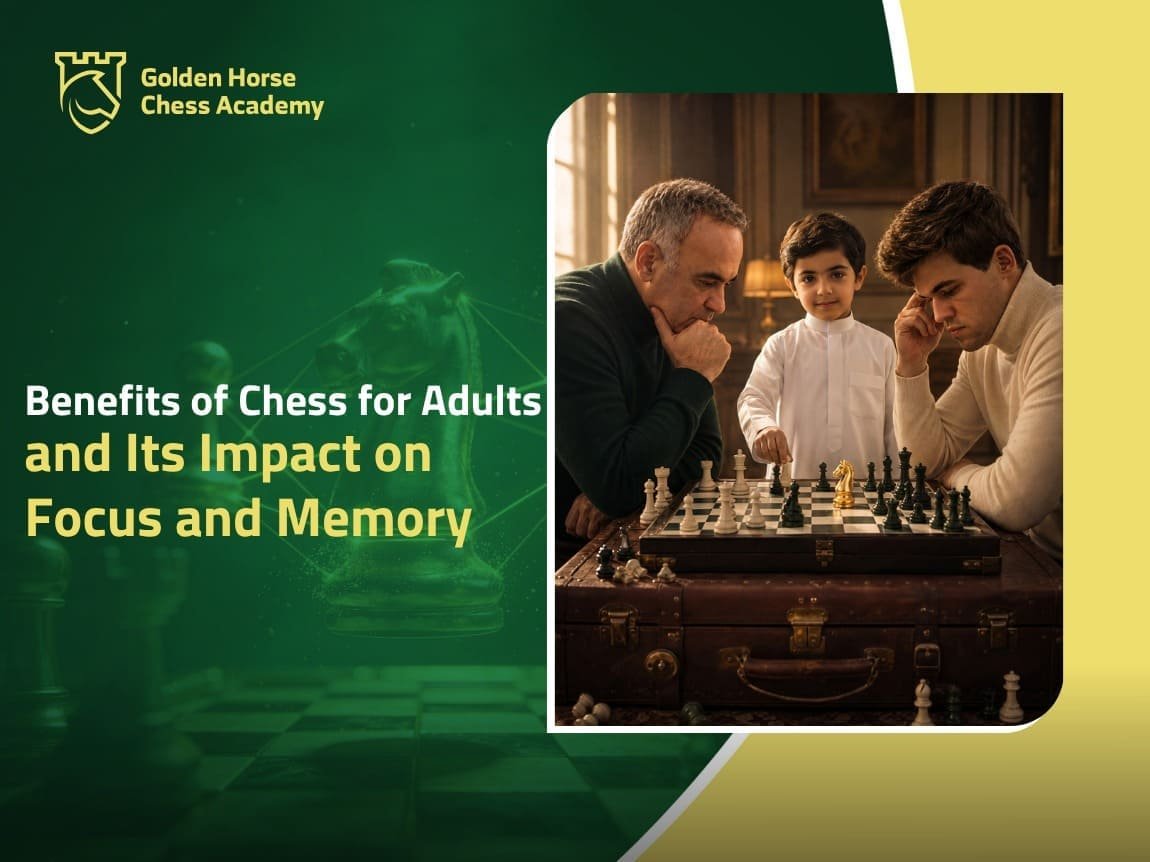
In today’s fast-paced world and demanding work environment, many adults look for activities that help sharpen their minds and improve concentration. Chess is one of the best intellectual games, combining entertainment with cognitive development. It helps enhance memory, strengthen strategic thinking, and improve decision-making skills. In this article, we explore the key benefits of chess for adults and how it can positively impact everyday life.
The Impact of Chess on Memory
Working Memory
Chess requires players to hold and process a large amount of constantly changing information, including piece positions, future possibilities, and strategic plans for both themselves and their opponents. This process actively engages working memory, the cognitive system responsible for temporarily storing and manipulating information. Scientific studies have shown that regular chess practice can improve working memory performance by up to 15%, leading to noticeable improvements in everyday activities such as:- Remembering names
- Managing multiple tasks simultaneously
- Recalling information more quickly
Long-Term Memory
Chess players continuously memorize opening variations, tactical patterns, and classical strategic positions. This ongoing challenge strengthens the brain’s ability to store and retrieve information, helping maintain memory flexibility even as people age.Chess and Improved Focus and Attention
Sustained Concentration
In a world filled with distractions such as notifications, messages, and endless meetings, prolonged concentration has become increasingly rare. Chess requires players to maintain focus on the board for extended periods, carefully tracking every move and calculating countless possibilities. This regular exercise in concentration retrains the brain for deep focus, resulting in:- Increased workplace productivity
- Better reading and study performance
- Greater ability to complete complex tasks without distraction
Selective Attention
Chess teaches players how to focus on critical details while ignoring irrelevant information. This skill, known as selective attention, is especially valuable in the digital age, where individuals are constantly exposed to overwhelming amounts of information.The Role of Chess in Developing Analytical Thinking
Critical Thinking
Chess forces players to think critically throughout every game:- Is this move the best option?
- What weaknesses exist in my plan?
- How might my opponent respond?
Seeing the Bigger Picture
Strong chess players can focus on details while simultaneously understanding the overall strategic landscape. They learn to balance short-term objectives, such as tactical opportunities, with long-term strategic goals. This ability to think on multiple levels is one of the most valuable advantages chess offers adults, particularly in leadership and management roles.How Chess Improves Decision-Making
Making Decisions Under Pressure
Chess requires players to make important decisions within limited time constraints, often in high-pressure situations. This repeated practice enhances the ability to remain calm and make effective decisions under stress a crucial skill in both personal and professional environments.Evaluating Risks and Opportunities
Every move in chess involves weighing risks against potential rewards. Players learn how to assess options, analyze consequences, and choose the most effective course of action. These skills translate directly into areas such as:- Investment decisions
- Project management
- Handling complex family and personal situations
Learning from Mistakes
In chess, mistakes often lead to immediate consequences such as losing material or the game itself. Unlike everyday life, where the effects of poor decisions may take time to become apparent, chess provides instant feedback, helping players develop the ability to learn from errors and avoid repeating them.The Benefits of Chess for Reducing Mental Stress
Active Meditation
Chess is often described as a form of active meditation. When players sit at the board, they enter a state of deep concentration similar to mindfulness, where distractions fade away and attention becomes fully focused on the present moment. This state can help lower cortisol levels the body’s primary stress hormone.A Mental Escape
For many adults, chess provides a healthy mental refuge from the pressures of work and daily responsibilities. Time spent playing allows individuals to disconnect from everyday concerns and engage in a structured and enjoyable intellectual challenge.Better Sleep Quality
Regular chess practice can contribute to improved sleep quality by reducing stress and providing the brain with organized mental stimulation, making it easier to relax afterward.Chess and the Prevention of Age-Related Cognitive Decline
Building Cognitive Reserve
Research suggests that mentally stimulating activities, including chess, help build what scientists call cognitive reserve. Cognitive reserve refers to the brain’s ability to cope with age-related changes and neurological decline. The greater the cognitive reserve, the lower the risk of developing conditions such as dementia and Alzheimer’s disease. By continuously challenging memory, concentration, and reasoning skills, chess is considered one of the most effective activities for strengthening this reserve.Delaying Cognitive Aging
A study published in BMC Geriatrics found that adults who regularly engage in strategic games such as chess tend to experience slower cognitive decline compared to those who do not participate in mentally stimulating activities. In some cases, the difference may be as much as five to seven years.Stimulating Neural Connections
Chess encourages the formation of new neural pathways and synaptic connections within the brain a process known as brain plasticity. Even in adulthood and old age, the brain remains capable of developing these connections, demonstrating that learning and cognitive growth can continue throughout life.Social Benefits of Chess
Building Social Connections
Although chess is played individually on the board, it is highly social outside of the game itself. Chess clubs, academies, and tournaments provide adults with opportunities to meet and interact with people who share the same passion and interests.Strengthening Communication Skills
Chess promotes mutual respect through traditions such as shaking hands before and after a game, maintaining proper etiquette during play, and accepting victory or defeat with sportsmanship. These values help improve social interaction and professional communication skills.A Family-Friendly Activity
Chess is an excellent activity for parents and children to enjoy together. It strengthens family bonds while providing a positive example of lifelong learning and intellectual growth.How Often Should Adults Play Chess Each Week?
The Optimal Frequency
According to experts, the ideal amount of chess practice for adults is:- 3–5 sessions per week for beginners.
- 5–7 sessions per week for intermediate and advanced players.
Recommended Session Length
- 30–45 minutes for recreational play and cognitive benefits.
- 1–2 hours for serious improvement or tournament preparation.
Quality Over Quantity
The quality of practice matters more than the number of sessions. One focused 45-minute session is more effective than several distracted sessions. A productive training session may include:- 10 minutes: Solving tactical puzzles.
- 20 minutes: Playing a training game.
- 15 minutes: Reviewing and analyzing mistakes.
Does Chess Affect Different Age Groups Differently?
Benefits for Young Adults (18–40 Years)
- Improved concentration for work and study.
- Enhanced strategic thinking valuable for management and leadership.
- Better stress management in professional environments.
Benefits for Middle-Aged Adults (40–60 Years)
- Helps maintain mental sharpness.
- Slows age-related cognitive changes.
- Provides a stimulating intellectual challenge outside of work.
- Supports a healthier work-life balance.
Benefits for Seniors (60+ Years)
- Helps reduce the risk of cognitive decline and dementia.
- Encourages social engagement and reduces isolation.
- Supports cognitive independence and daily mental functioning.
Why Choose Golden Horse Academy?
At Golden Horse Academy, we understand that adults require a different training approach than children. Our programs are specifically designed to meet the needs of adult learners.Specialized Programs for Adults
We offer customized training programs that accommodate professional and family commitments while helping adults improve their chess skills effectively.Comprehensive Assessment and Progress Tracking
Each student receives a detailed skill assessment and ongoing progress reports that help identify strengths, weaknesses, and development opportunities.Professional and Certified Coaches
Our coaching team consists of instructors certified by both the Saudi Chess Federation and the International Chess Federation (FIDE), with extensive experience in coaching adult players.Motivating Learning Environment
We provide a supportive and engaging training environment tailored to adults, including both private and group coaching sessions.About Golden Horse Academy
Golden Horse Academy is a Saudi institution specializing in chess education and cognitive development. We firmly believe that chess is a powerful tool for building minds and shaping character at every stage of life.Our Experience
- Years of experience coaching adults and senior learners.
- Training programs designed according to the latest international standards.
- Strong participation and success in local and regional tournaments.
Our Coaches
Our team consists of highly qualified professional coaches who combine international expertise with a deep understanding of adult learning needs.Our Vision
To become the leading chess academy in Saudi Arabia and contribute to building a thoughtful, strategic, and intellectually empowered society across all age groups.Chess and Saudi Vision 2030: A Strategic Partnership
As part of the ambitious Saudi Vision 2030, which aims to create a productive and innovative society, chess serves as an effective tool for achieving many national objectives.1. Developing Cognitive Skills Among Citizens
Vision 2030 emphasizes quality of life and the development of critical skills. The benefits of chess for adults directly support these goals by strengthening:- Critical thinking
- Problem-solving abilities
- Decision-making skills
2. Building a Healthier Society
Vision 2030 seeks to improve citizens’ mental and psychological well-being. Chess contributes by:- Reducing stress
- Improving sleep quality
- Supporting long-term cognitive health